Foto: Christian Flierl
Mit Paavo Järvi in der Paul Sacher Stiftung

On the trail of Arthur Honegger

In March, we are focussing on him with his 2nd Symphony: the Swiss composer Arthur Honegger. He graced the 20-franc note until 2017. Many of his handwritten scores can be found in the Paul Sacher Foundation in Basel.

Ulrike Thiele

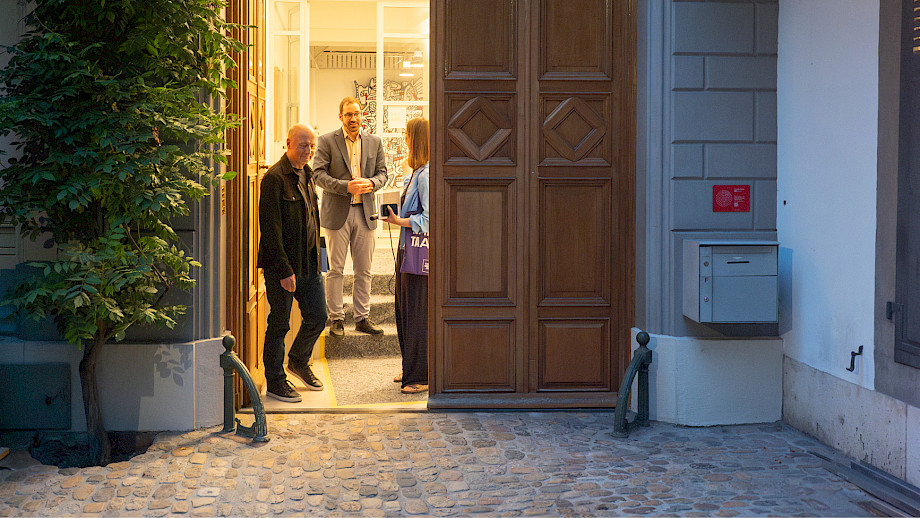
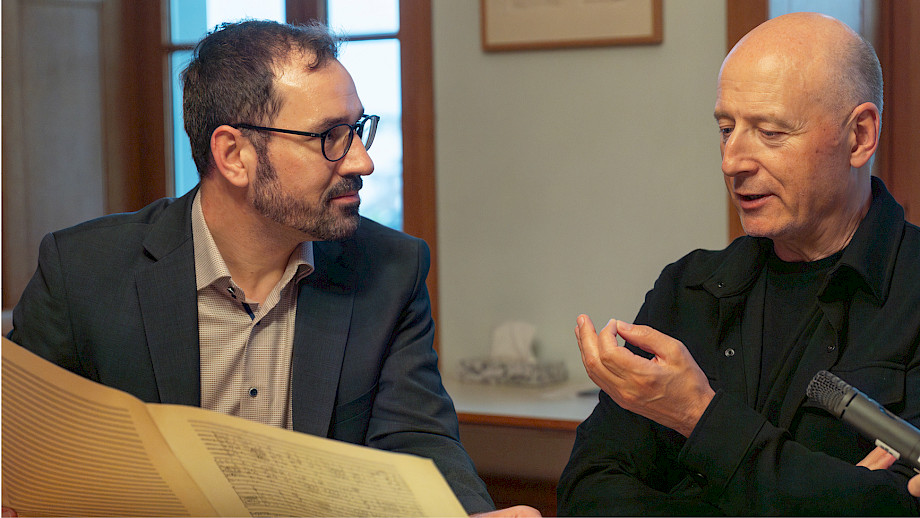
The public visiting time is already well over - yet Director Florian Besthorn opens the doors of the Paul Sacher Foundation exclusively for us in the best of moods. Paavo Järvi was still on stage rehearsing with the Tonhalle-Orchester Zürich for the upcoming concerts. But he didn't want to miss the opportunity to go in search of traces of "Honegger" at this special and historic location. So instead of finishing work, it's off to Basel to immerse himself in a remarkable chapter of Swiss and international music history.

Early interest

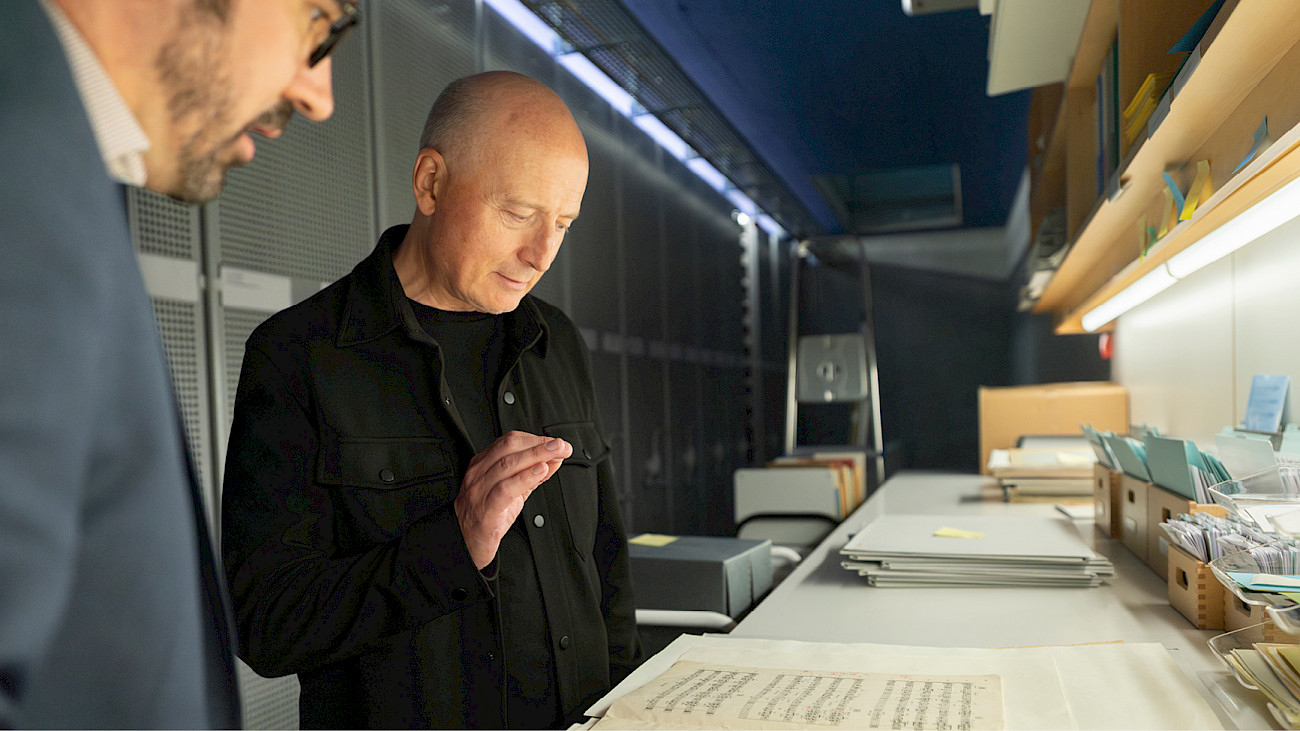
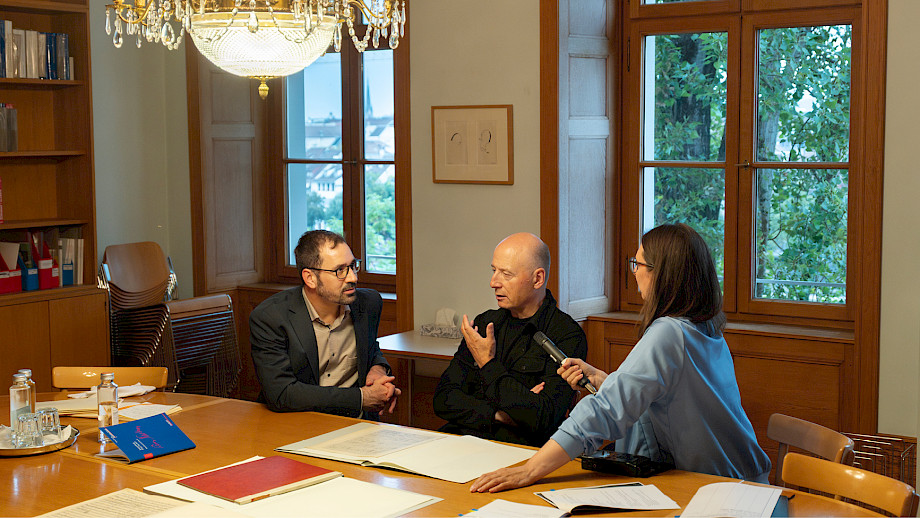
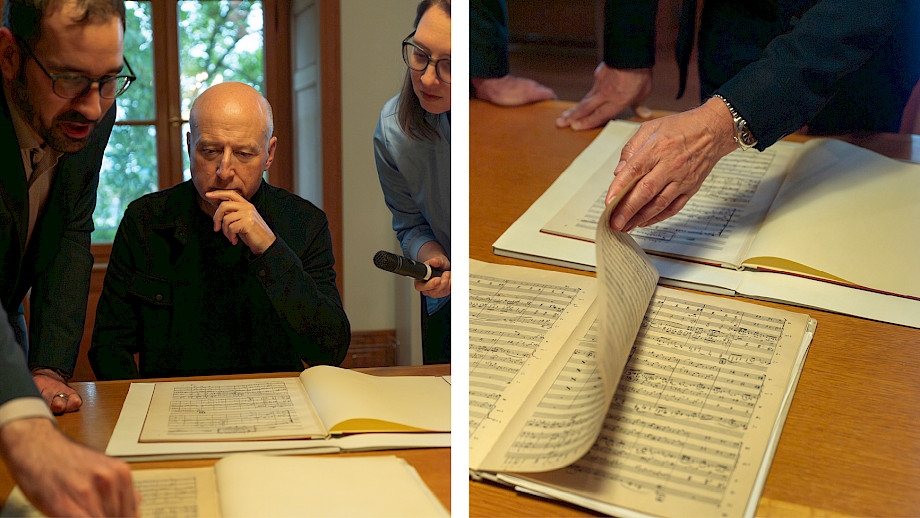
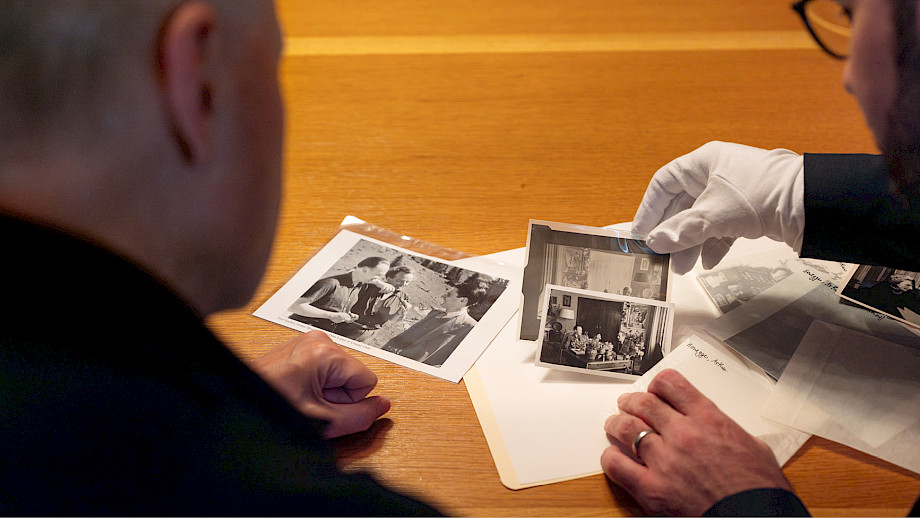
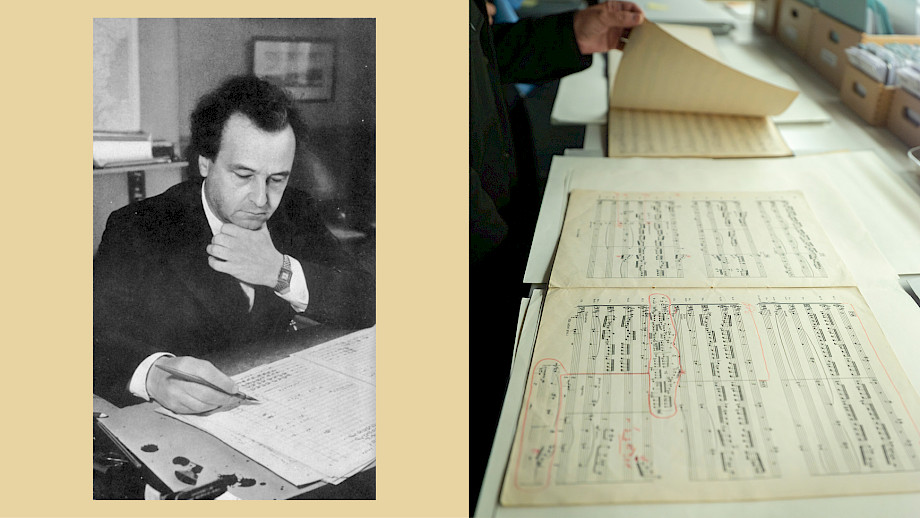
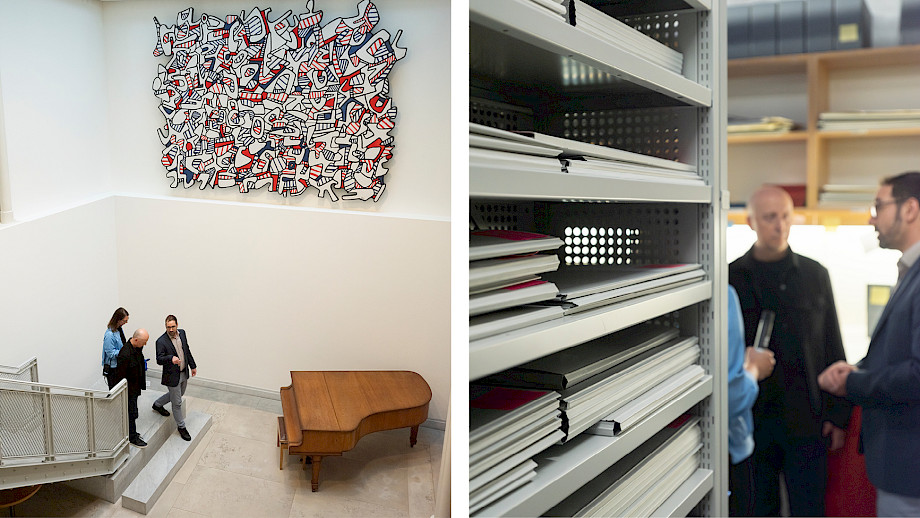
"I've prepared a few things from the collection in the reading room. Later, we'll take a tour of the museum," says Florian Besthorn. He leads us up a few steps, past the imposing atrium and two large-format paintings by the founder of the foundation and his wife Maja Sacher-Stehlin, into one of the reading rooms. Here, Sacher's conducting scores, sketches by Honegger, photos of both of them, archive boxes and folders from the rich collection of sources are waiting on a long wooden table. The white gloves are also at the ready - as befits a collection with such valuable holdings.

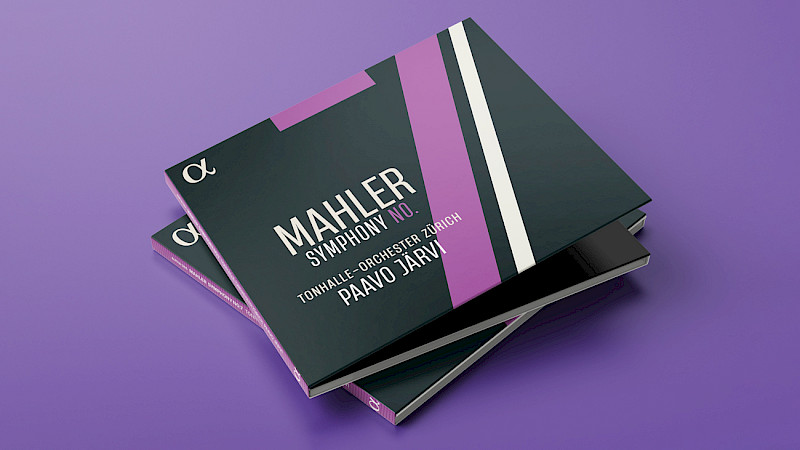
Looking at these sources, Paavo Järvi's thirst for discovery is palpable. He had been toying with the idea of focussing on the symphonist Honegger for some time. He had already encountered his music during his studies, and later during his time in France as chief conductor of the Orchestre de Paris. Now, as Music Director of the Tonhalle Orchestra Zurich, which has a remarkable performance tradition with Honegger, he is taking the opportunity to raise awareness of his compositions, which are well worth listening to, and to bring them to life through concerts and recordings.

"His works are too good not to be heard. He had his finger on the pulse of the times in Paris, which is palpable in his musical language. And he continued to cultivate relationships with his Swiss homeland. That's why the music is also interesting for Zurich," says Paavo Järvi, before turning his attention to the paintings by Sacher and Honegger.

Client and friend

"What was the relationship between Arthur Honegger and Paul Sacher like?" asks Paavo Järvi. Florian Besthorn answers with a Sacher quote: "Honegger is the composer who was closest to me artistically and personally." In fact, the Swiss-French composer and the Basel conductor and patron of the arts enjoyed a close friendship. It began with Sacher's musical approach: in 1929, he conducted Honegger's oratorio "Le Roi David" with his Basel Chamber Orchestra. It is the work that also brought the composer international interest: premiered in 1921 in Mézières in Vaud, it was the Zurich performance of the revised version at the music festival of the International Society for New Music (IGNM) in 1926 that helped him achieve his breakthrough.

In both cases, another patron, Werner Reinhart from Winterthur, was significantly involved - without his generous financial support, neither project would have been realised. Sacher built on these successes to a certain extent when he added "Le Roi David" to his ensemble's programme in 1929, thus laying the foundations for an increasingly intensive exchange with the composer, whom he then met in person in Solothurn in 1931.

This was followed by countless premieres and re-performances under his direction as well as four commissions: "La danse des morts" in 1938, the 2nd Symphony in 1941, the 4th Symphony in 1946 and "Une cantate de Noël" in 1953. The fact that Honegger presented Paul Sacher with many of his manuscripts during his lifetime shows how close the two composers were. After Honegger's death in 1955, his widow Andrée Vaurabourg-Honegger gave part of the estate to the Bibliothèque Nationale de France in Paris. In 1995, his children Jean-Claude (1926-2003) and Pascale Honegger (1932-2025) gave further documents to the Paul Sacher Foundation, so that, according to Florian Besthorn, the collection "represents by far the largest collection accessible to researchers today". It includes early student papers as well as a wide variety of sources relating to Arthur Honegger's masterpieces such as his stage work "Jeanne d'Arc au bûcher" and his five symphonies.

A special source

The archives of the Tonhalle-Gesellschaft Zürich record a performance with Paul Sacher on 15 August 1943 - the only one under his direction with works by Honegger: as part of the Zurich Concert Weeks, he conducted the 2nd Symphony (for string orchestra and trumpet) with his Collegium Musicum. However, the premiere had already taken place earlier, on 18 May 1942, also in Zurich. Sacher had actually commissioned the work from Honegger as early as 1936, but the composer did not complete it until 1941.

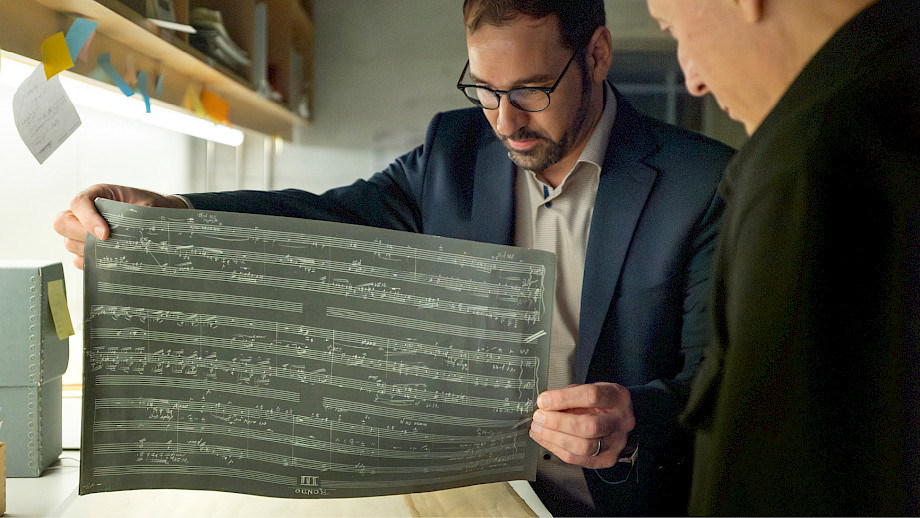
Interesting in this context is a document in the Paul Sacher Foundation, which is an apparently discarded version of the second movement. The two-page fair copy clearly goes beyond the sketch stage - and yet it no longer seems to have been a coherent solution for the composer. "Nevertheless, it would be exciting to hear how this music fits into and changes the overall concept of the symphony," says Paavo Järvi.

The authorised version focuses on contrast: while the first two movements create a gloomy atmosphere, the chorale in the finale brings light into the darkness in the manner of Bach with the solo trumpet - and then in D major, the key that has been inextricably linked with the struggle from minor to major since Beethoven's Ninth: per aspera ad astra. Hope shines through. In the context of the Second World War and the occupation of Paris, where Honegger had lived for many years, this dramaturgy was interpreted in socio-political terms.

Paris and Zurich

The French capital was the centre of Arthur Honegger's life from 1913 onwards - whose name is still heard today in both elegant French and accented Swiss-German pronunciations. Both have their justification. After all, his father, who was also called Arthur Honegger, came from the Zurich Oberland; his mother Julie was born Ulrich and thus descended from an old Zurich family. When Arthur junior was born in Le Havre in 1892, his father had already been living there for over 20 years. As a merchant and coffee importer, his proximity to the commercial harbour was crucial - and not just for him. A Swiss colony had formed there, meaning that Honegger's two roots were closely intertwined from birth.

In 1909/10, he studied at the Zurich Conservatory under the most prominent artistic personalities imaginable: Violin with Willem de Boer, the first concertmaster of the Zurich Tonhalle Orchestra; music theory with Lothar Kempter, the former conductor at the Zurich Aktientheater (forerunner of the Zurich Opera House), and composition with Friedrich Hegar, then chief conductor of the Tonhalle-Orchester Zürich. Honegger then continued his studies in Paris. Between 1911 and 1913, he travelled weekly between Le Havre and Paris until his family returned to Switzerland in 1913.

Paavo Järvi visits the Paul Sacher Foundation in Basel in preparation for his Honegger project. (Photo: Christian Flierl)
Florian Besthorn, Director of the Paul Sacher Foundation, welcomes Paavo Järvi and Ulrike Thiele. (Photo: Christian Flierl)
Florian Besthorn shows them the archive, which contains scores, photos and sketches from Honegger's estate. (Photo: Christian Flierl)
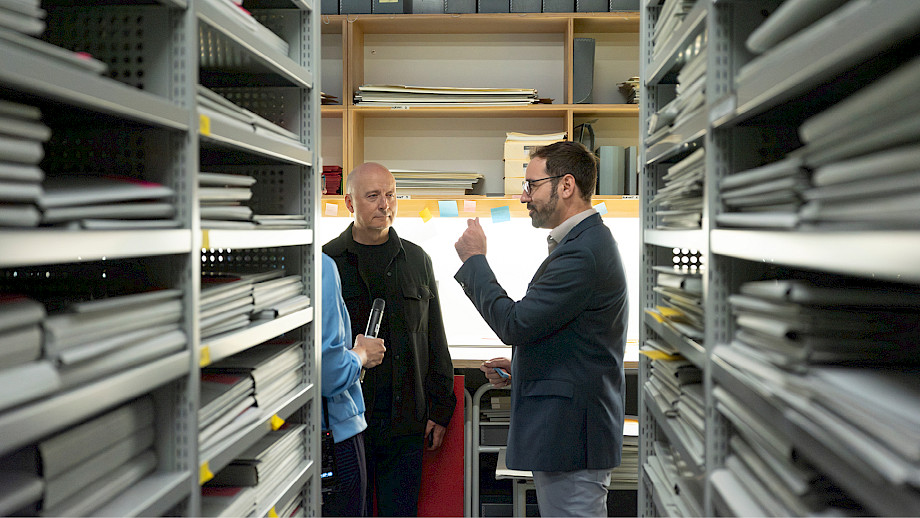
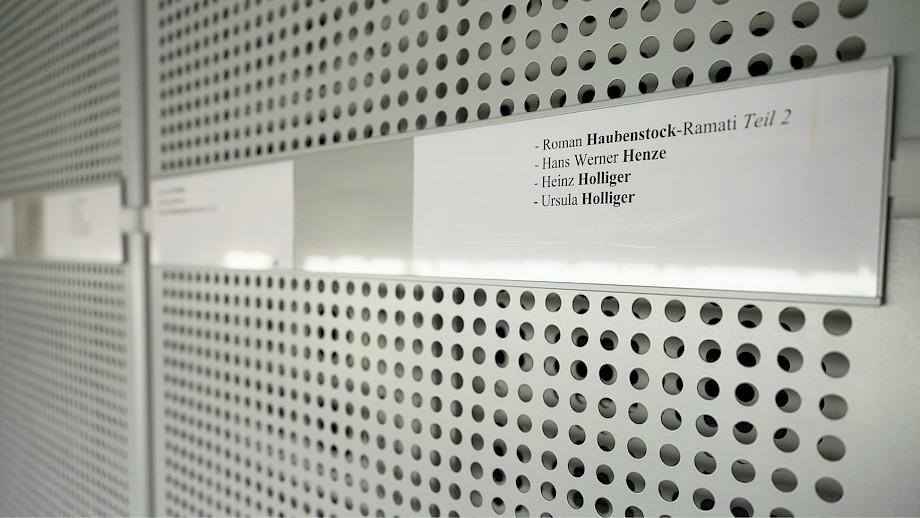
In addition to the estate of Arthur Honegger, the Paul Sacher Foundation holds over 120 other collections. (Photo: Christian Flierl)
Haubenstock-Ramati, Henze, Holliger: the archive is attractive to music researchers from all over the world. (Photo: Christian Flierl)
Paul Sacher once conducted Arthur Honegger's Symphony No.2 at the Tonhalle Zurich, which Paavo Järvi is now also conducting. (Photo: Christian Flierl)
In addition to the sheet music, the Paul Sacher Foundation also has photos showing Arthur Honegger with Paul Sacher. (Photo: Christian Flierl)
Paavo Järvi has long wanted to put the symphonist Arthur Honegger in the spotlight: "His works are too good not to be heard." (Photo: Christian Flierl)
Arthur Honegger (1892-1955) once studied in Zurich. (Photo: Christian Flierl)
Tour of the Paul Sacher Foundation. (Photo: Christian Flier)

Honegger decided in favour of Paris. He only did his military service for Switzerland in 1914/15. His French teachers were also anything but unknown: André Gédalge, Charles-Marie Widor and Vincent d'Indy. His circle of friends at this time already included Darius Milhaud, Germaine Tailleferre, Georges Auric and Jacques Ibert. Auric, Tailleferre, Milhaud - as well as Francis Poulenc, Louis Durey and Honegger - became known as the "Groupe des Six" in the circle of Erik Satie and Jean Cocteau from 1920 thanks to a newspaper article.

For the self-confessed "passionate Beethovenian", conflicts over the polemically propagated principles of "anti-Germanic", "simple" and "pure" French music were pre-programmed. Accordingly, Honegger withdrew from participating in the group's "manifesto". Nevertheless, he benefited from the highly publicised staging. And his works, with their light-heartedness, also breathe the spirit of the "Groupe des Six" and the times. What is striking about Honegger is the simultaneity of different styles: the "Bible expert", as he himself emphasised, devotes himself to "Le Roi David" and "Judith", while at the same time writing a crazy roller-skating ballet, "Skating Rink" - and the technology and railway freak in him sets a homage to the steam locomotive "Pacific 231" to music.

Zurich and Basel

It was precisely during this period, the "Années folles", that Volkmar Andreae gave the first performance of a work in Zurich: in 1923, he put the "Pastorale d'été" on the programme. Nothing there "wild twenties", the other Honegger is heard. "Le Roi David" follows in 1926 and 1927. For a "Popular Concert" and the festive concert of the Congress of Mathematicians, "Pacific 231" was chosen. The 1930s and 1940s brought both the symphonist and the music dramatist Honegger to Zurich in close succession. And Paul Sacher is also remarkably present in the city on the Limmat: he conducts several performances of "his" 2nd Symphony. In connection with this, there were invitations to the Schönenberg, the Sachers' villa high above Pratteln. With its subtitle "Deliciae basiliensis" ("Basel Delights"), the 4th Symphony even refers explicitly to Sacher's territory, as it was composed in 1946 as a commissioned work to mark the 20th anniversary of the Basel Chamber Orchestra. "Z'Basel, an mym Rhi" is just as much a part of it as the piccolo and Basel drum from the carnival - leaving room for the mischievous Honegger.

This humour is reminiscent of Paul Hindemith, with whom Honegger had cultivated a close friendship since the 1920s, which was also strengthened in Sacher's circle. In 1952, for example, Honegger travelled to Basel for the premiere of Hindemith's symphony "The Harmony of the World" under Sacher's direction.

A day later, a celebration was held there to mark the 25th anniversary of the Basel Chamber Orchestra. "I was so sad that I didn't hear Paul's cantata at the funeral pyre. I knew nothing about it, otherwise I would certainly have stayed," wrote Honegger to Hindemith. The latter had composed a canon for which he quoted a theme from Honegger's oratorio "Jeanne d'Arc au bûcher": "We are happy (anyway) with the good Chamber-O, [...] keep it blooming like this, in dulci jubilo, with our Sacher Paulo, true Basel Läckerlo." Hindemith was now a professor at the Institute of Musicology at the University of Zurich (see p. 46) - Honegger continued to live in Paris until the end, "as a hermit at the foot of Montmartre". But the connection to Switzerland was never broken.

Walk-in gift

When one part of the story is over, the other part is just beginning: that of preserving a legacy, of providing the freest possible access to source material for research purposes of all kinds. The Paul Sacher Foundation was established in 1973, initially with the aim of preserving Sacher's music library. Later, the collection was increasingly expanded - and systematically: existing items were completed as far as possible through targeted acquisitions, and new focal points were added. "When the foundation opened, around 50% of the collections were 'Swiss' collections. But then it became more and more international during Sacher's lifetime. At present, around 20% are still domestic, although many other collections also have clear 'Swiss' traits, through residencies for composing, collaboration with the Basel Chamber Orchestra and other orchestras on the occasion of premieres, etc.," explains Florian Besthorn on the tour of the building. Today, the holdings comprise over 120 collections of 20th and 21st century composers and performers. This makes the foundation one of the most important international research centres for contemporary music and the recent past.

On the way to the cellar, where "a special birthday present from Paul Sacher is waiting for us", Besthorn points to boxes of newly arrived material that are piling up: "A lot is already accumulating here. And it takes time to sift through all the new arrivals and organise them appropriately." Paavo Järvi would like to see some more original scores with entries by composers and performers. That's why we've now reached the bottom floor. "It's about to get cold!" warns Besthorn. Then we enter the air-conditioned cultural property storage room.

Several linear metres of Compactus cabinets are lined up next to each other: Berio, Boulez, Dutilleux, Gubaidulina, Henze, Honegger, Leibowitz, Liebermann, Ligeti, Pagh-Paan, Reich, Rihm, Sacher, Ullmann, Ustvolskaya, Varèse, Webern - and many more. Florian Besthorn carefully pulls some treasures from the shelves and handles oversized formats of scores, while Paavo Järvi is already immersed in the colourful entries by Sacher and other conductors. "But what did someone like Paul Sacher, who had so much, want for his birthday?" we ask ourselves. "We're right in the middle of it," says Besthorn. "This is what he got for his 90th birthday! Paul Sacher has gifted himself with an additional cultural artefact room." There is even still room on some of the shelves - for future artefacts.

Arthur Honeggers Lebensstationen

1892 Geboren am 10. März als Sohn von Zürcher Eltern in Le Havre (Frankreich); bleibt sein Leben lang Schweizer Staatsbürger
1909–1911 Studiert am Konservatorium Zürich (Violine, Musiktheorie, Komposition)
1911–1913 Studiert am Pariser Konservatorium (Violine, Instrumentation, Komposition, Orchesterdirektion sowie Kontrapunkt und Fuge)
1913 Lässt sich in Paris nieder
1914/15 Schweizerischer Militärdienst
1915–1918 Setzt Studium bei Charles-Marie Widor (Komposition) und Vincent d’Indy (Dirigieren) fort
1920 Wird Mitglied des Pariser «Groupe des Six»
1921 Uraufführung des Oratoriums «Le Roi David»
1923 Mit «Pastorale d’été» wird mit dem Tonhalle-Orchester Zürich unter Volkmar Andreae erstmals ein Werk von Honegger in Zürich aufgeführt; komponiert «Pacific 231»
1927 Heirat mit der Pianistin Andrée Vaurabourg
1931 Lernt Paul Sacher kennen
1938 Konzertante Uraufführung von «Jeanne d’Arc au bûcher» unter der Leitung von Paul Sacher in Basel; erhält die Ehrendoktorwürde der Universität Zürich; wird Mitglied des Institut de France
1942 Paul Sacher leitet die Uraufführung der ihm gewidmeten 2. Sinfonie mit dem Collegium Musicum Zürich (Wiederholung 1943); szenische Uraufführung der deutschen Übertragung von «Jeanne d’Arc au bûcher» in Zürich
1946 Uraufführung der 3. Sinfonie mit dem Tonhalle-Orchester Zürich unter der Leitung des Widmungsträgers Charles Munch
1947 Konzert- und Vortragsreisen durch die USA und Südamerika
1951 Uraufführung der «Monopartita» unter der Leitung von Hans Rosbaud mit dem Tonhalle-Orchester Zürich («der Tonhalle-Gesellschaft Zürich zugeeignet»)
1955 Stirbt am 27. November in Paris

March 2026
Wed 11. Mar
19.30

Paavo Järvi & Janine Jansen

Tonhalle-Orchester Zürich, Paavo Järvi Music Director, Janine Jansen Violine Adès, Brahms, Mendelssohn Bartholdy
Thu 12. Mar
19.30

Paavo Järvi & Janine Jansen

Tonhalle-Orchester Zürich, Paavo Järvi Music Director, Janine Jansen Violine Adès, Brahms, Mendelssohn Bartholdy
published: 26.02.2026

Tags